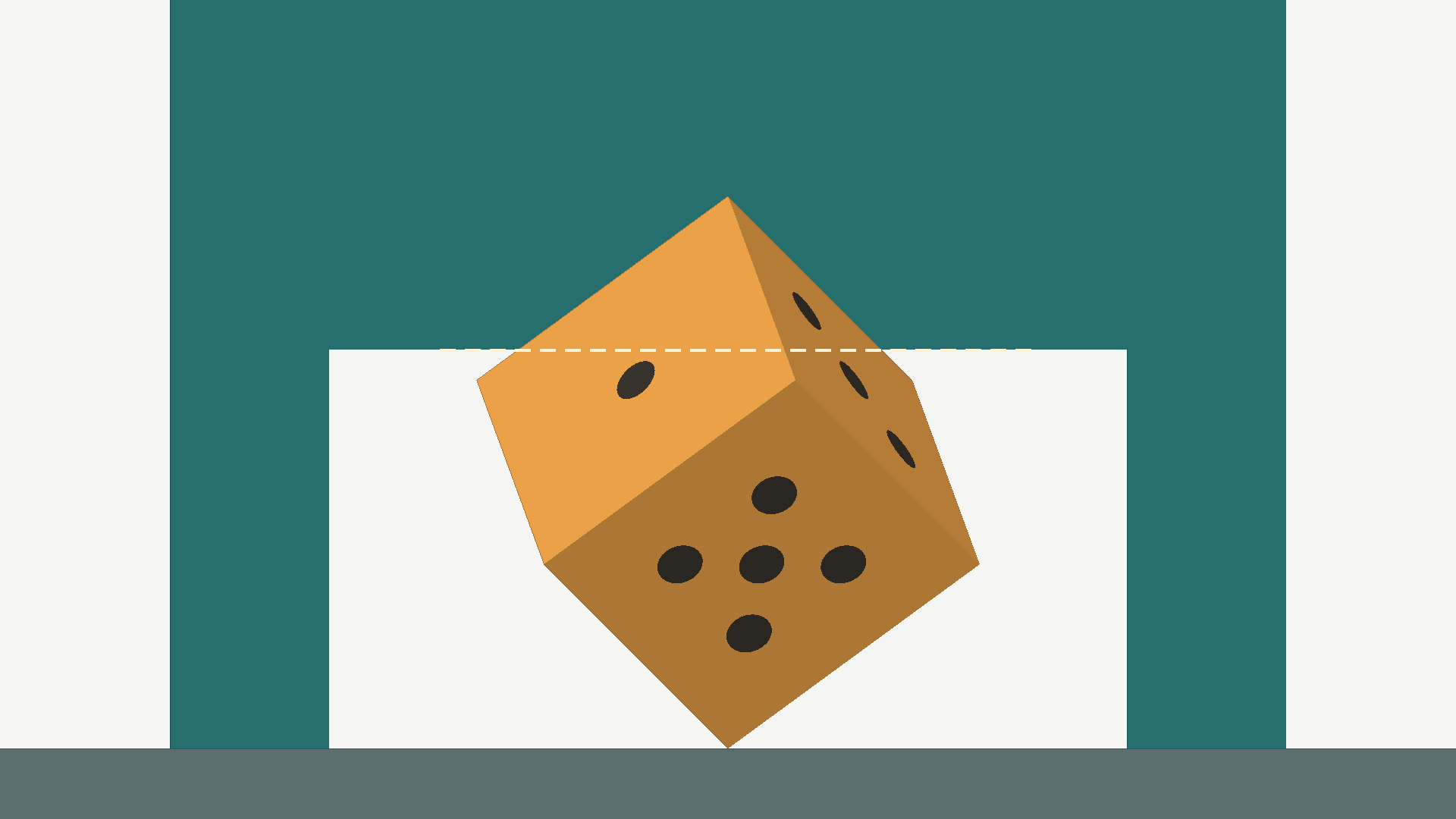
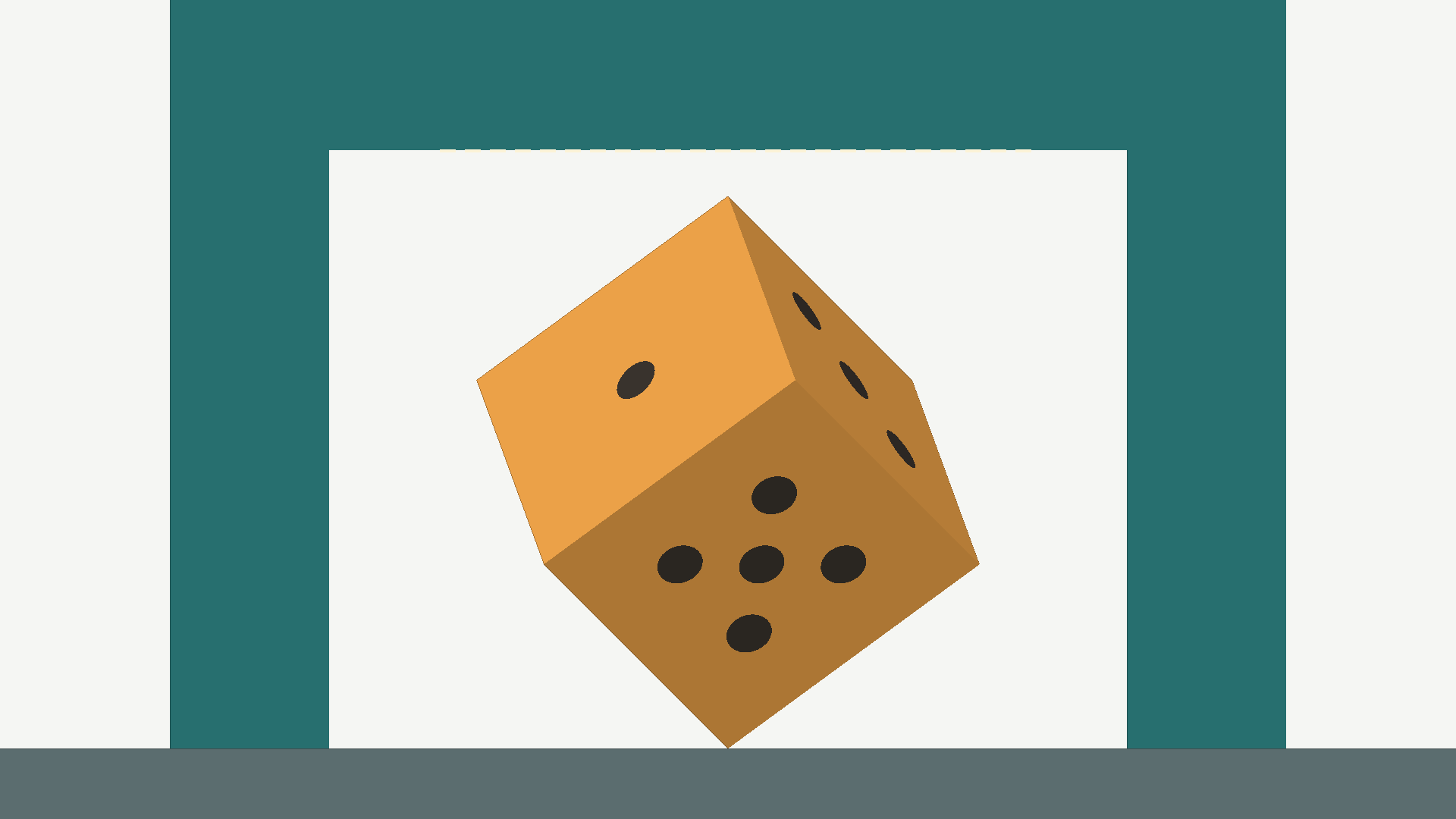
A 16 mm cube sits just 16 mm high on a flat face. Tip it onto one corner and its opposite corner reaches 27.71 mm. For a tower opening, those are two very different measurements.
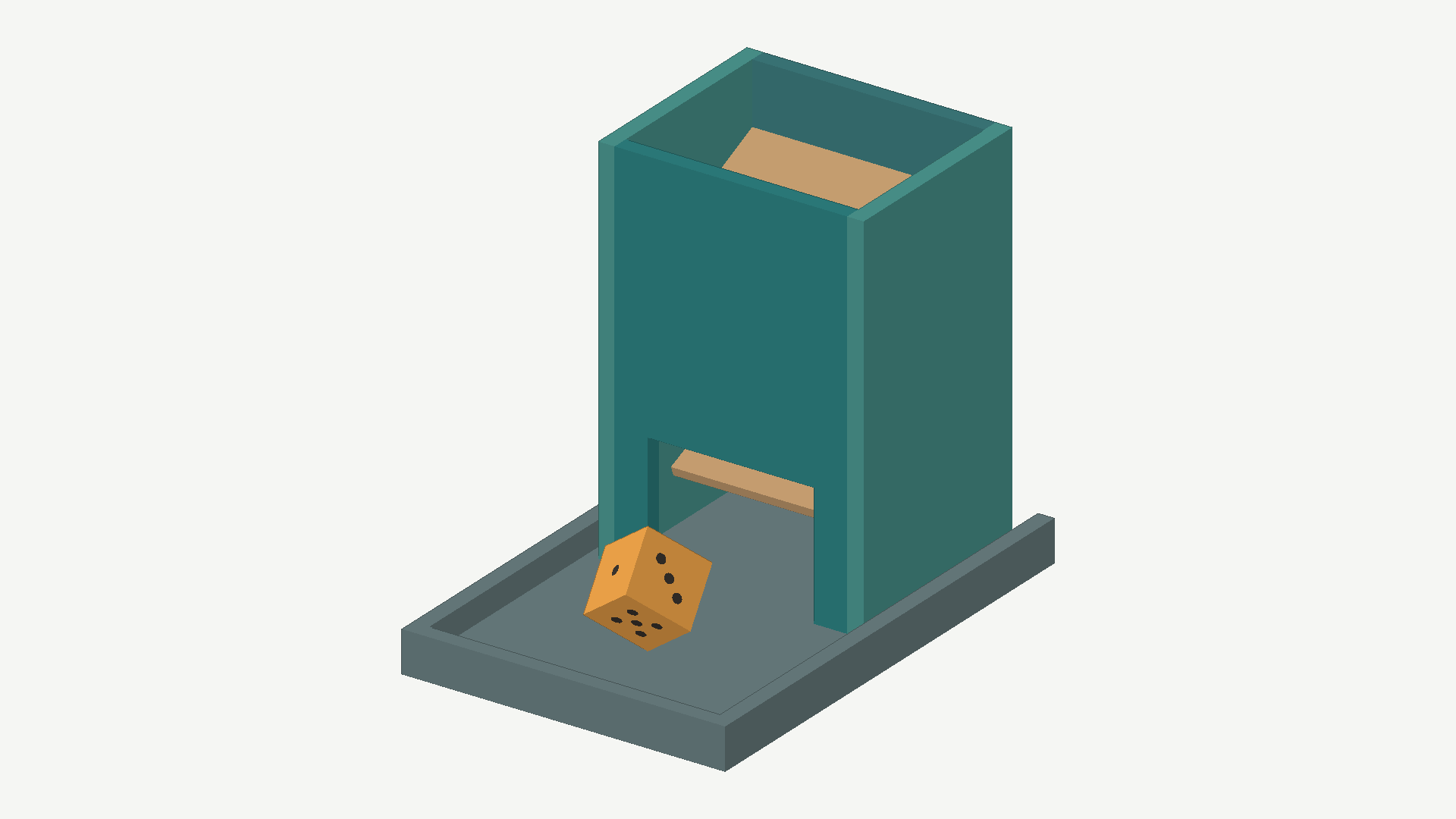
Which way up will the die arrive?
Inside this tower, three sloping ramps give the die several chances to turn. A design based only on the height of a flat face assumes the die will arrive in that same orientation. To check the doorway, stand the cube on a corner and compare its highest point with the underside of the header.
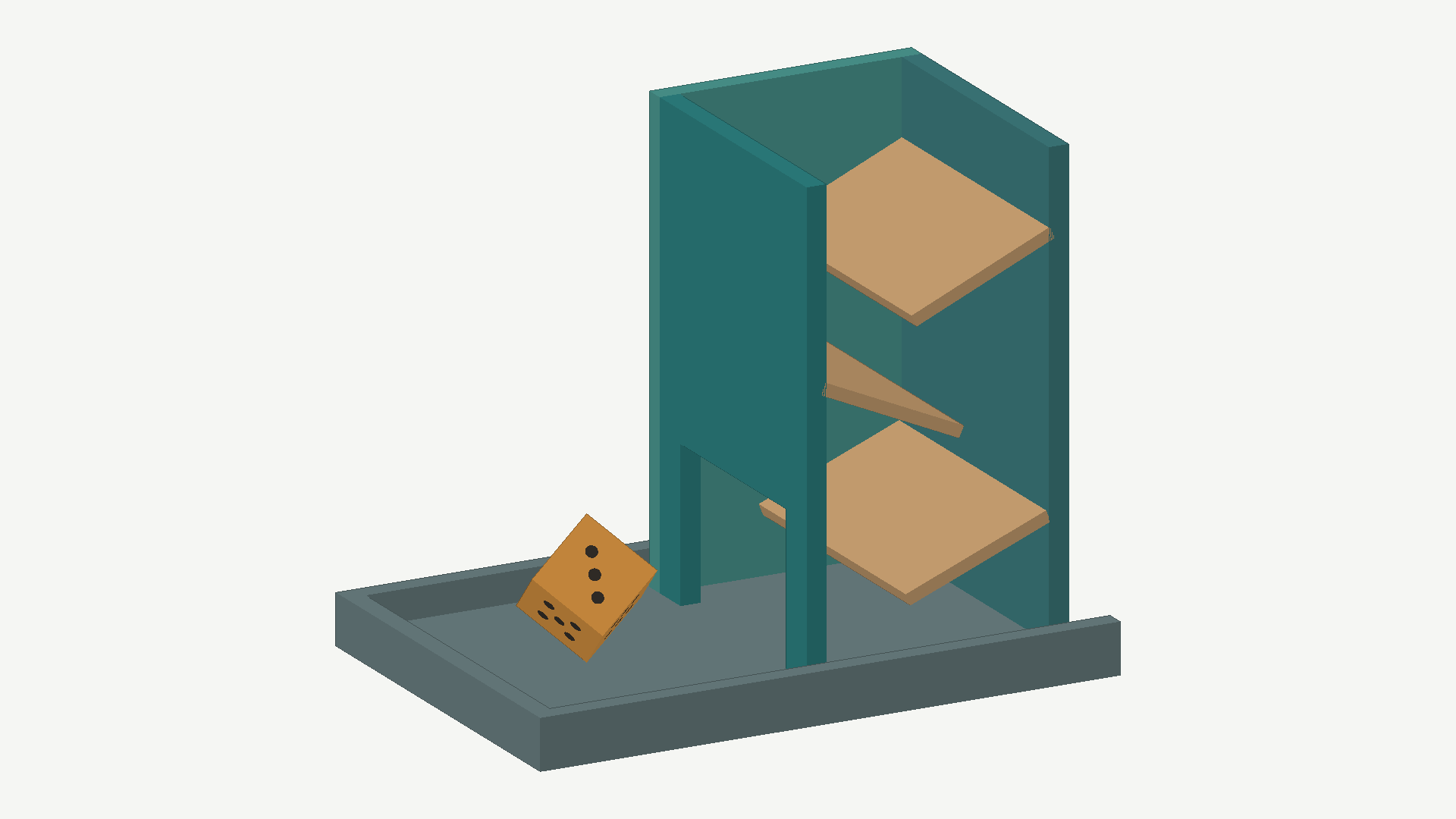
How much room is left at the doorway?
A 20 mm opening looks generous beside a 16 mm edge. In the corner-up comparison, the top of the die projects 7.71 mm above that opening. Raising the header to 28 mm gets past the corner by just 0.29 mm.
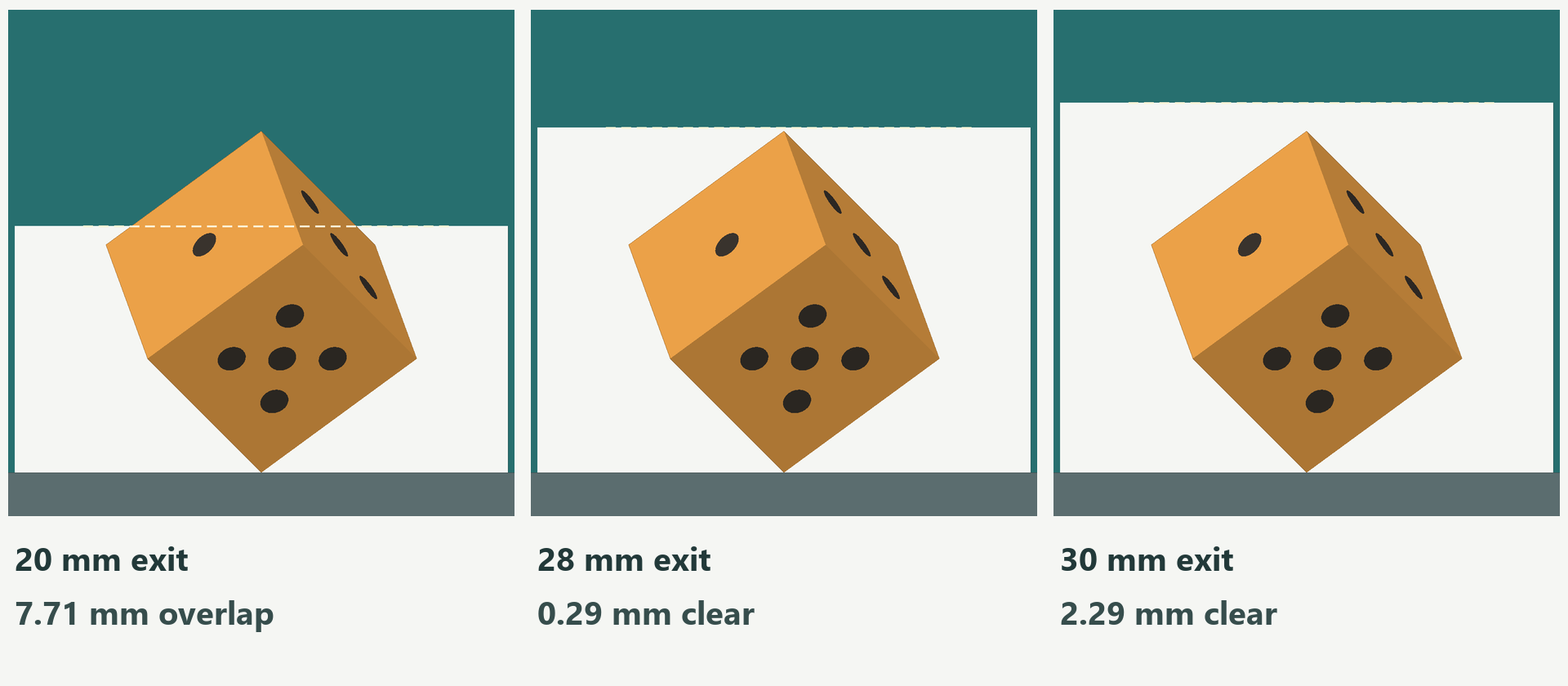

We chose 30 mm for the version to try on the tabletop. That gives the ideal cube 2.29 mm of vertical clearance in its tallest orientation. Whether a particular die rolls freely through the ramps and out into the tray still calls for a roll test.