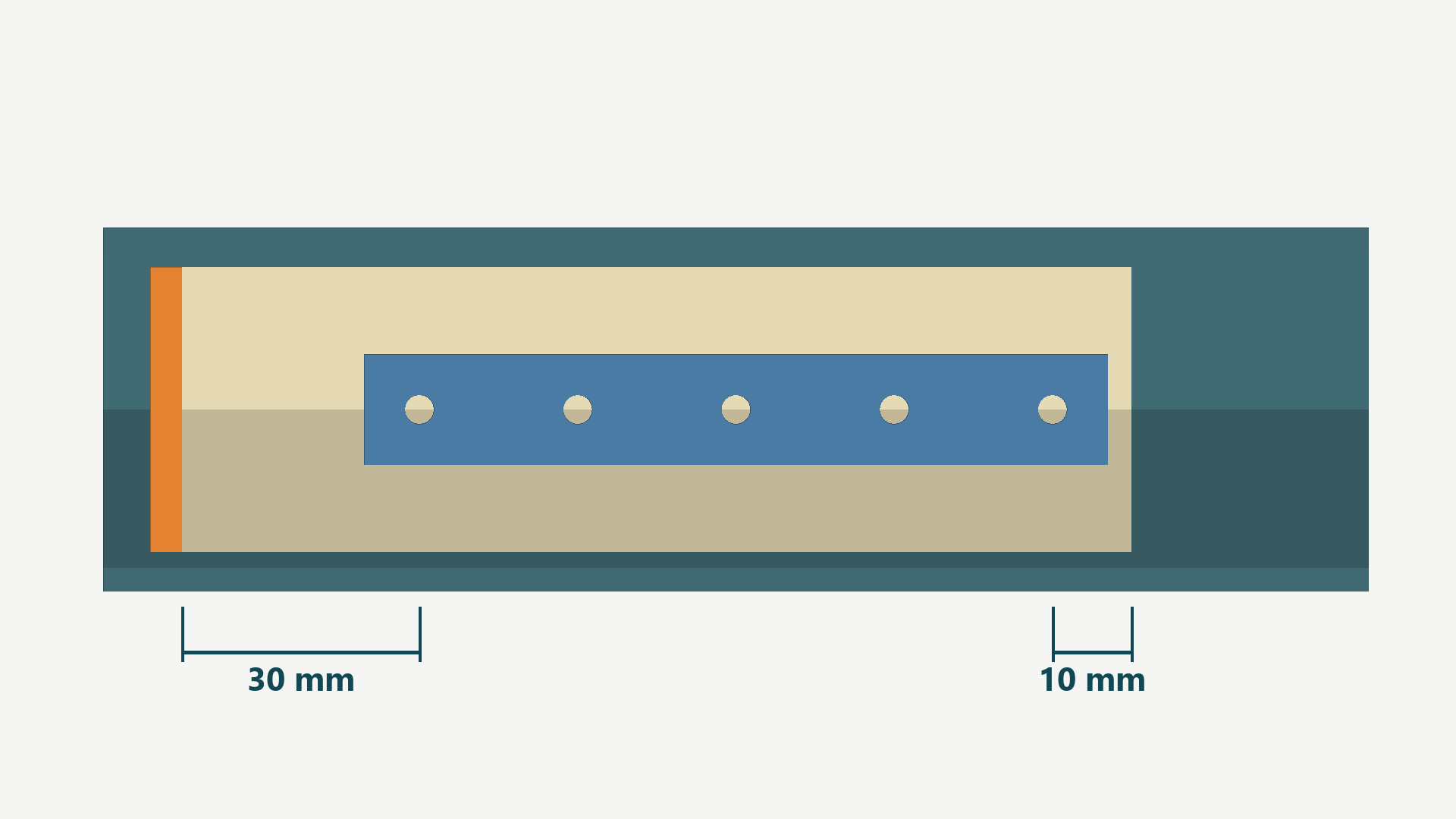
You want the first and last sewing holes to sit the same distance from the ends of a folded book section. Evenly spaced holes alone will not do that. In this punching-cradle design, moving the paper stop 10 mm changes the end margins from 30/10 mm to 20/20 mm, while all five guide holes stay in place.
Give every fold the same starting point
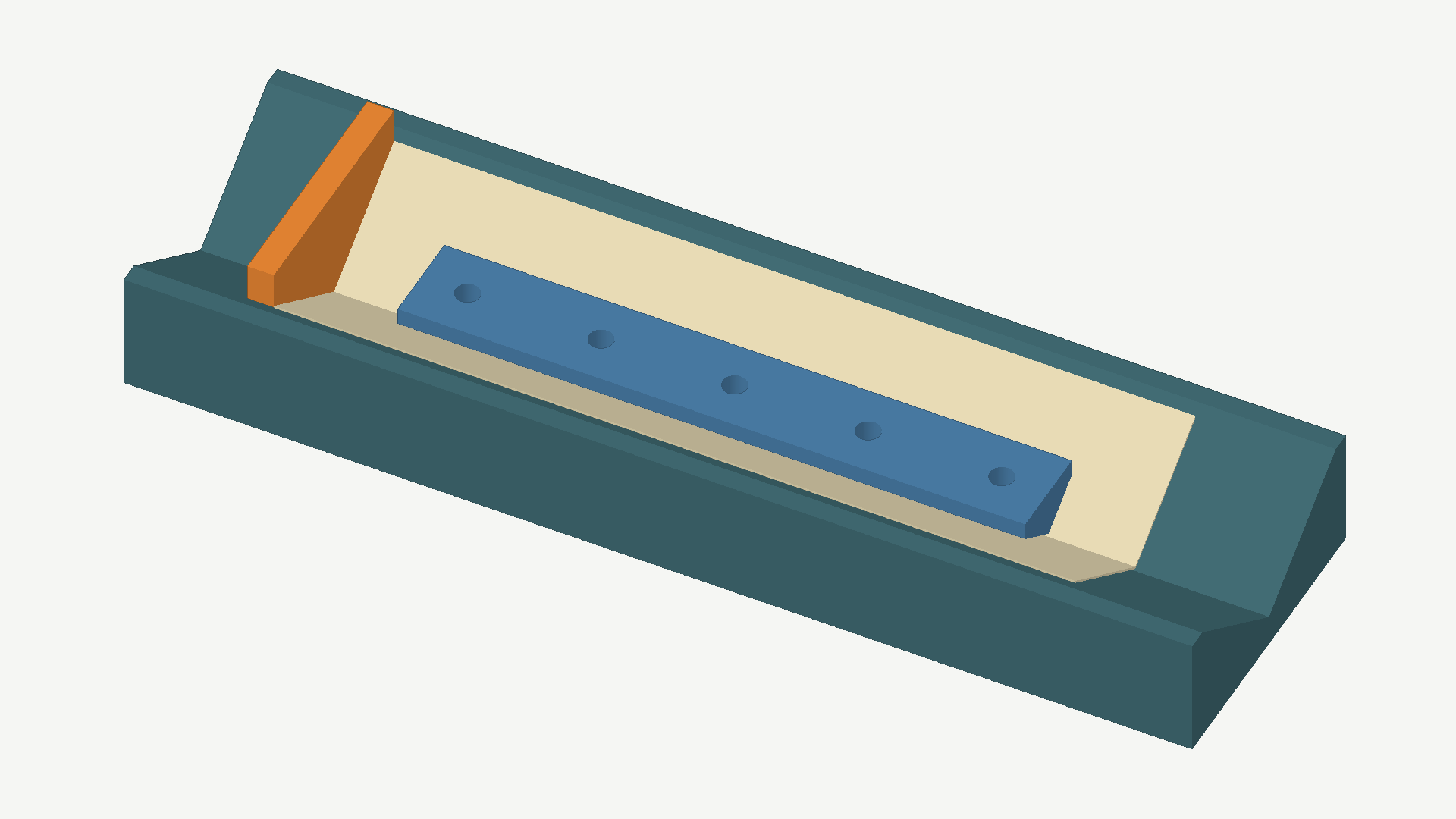
This original three-part geometry study was built in FreeCAD: a V-shaped cradle, a five-hole guide and a movable end stop. In the model, the fold rests in the V-shaped trough. The orange stop locates the end of the paper; the cream shape represents a 120 mm fold. The five holes in the blue guide mark where the awl would pass through the fold.
Measure from the paper’s edge
The fold is 120 mm long. The first and last hole centers are 80 mm apart, leaving 40 mm to share between the ends. Here the first hole sits 30 mm from the left edge of the paper. The last is only 10 mm from the right. Measuring from the ends of the cradle would miss that difference.
Equal end margin = (fold length − outermost hole span) ÷ 2.
Here: (120 − 80) ÷ 2 = 20 mm at each end.
A small move changes both ends
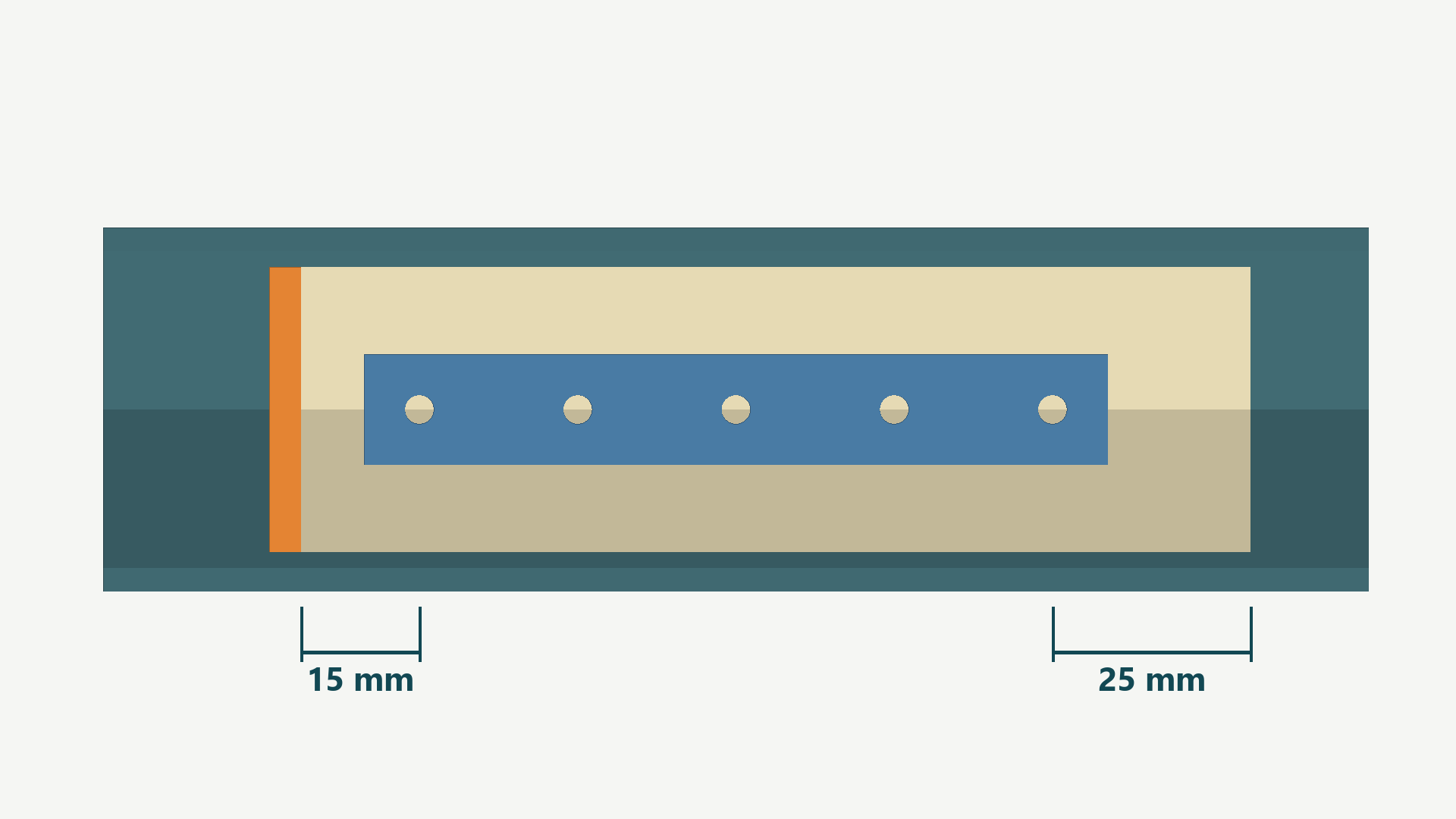
The first revision moved the stop and paper reference 15 mm to the right, with the blue guide fixed. The left margin shrinks to 15 mm and the right grows to 25 mm. The stitch pattern now favors the other end. A 20 mm difference between margins only called for half that much travel.
Center the pattern once
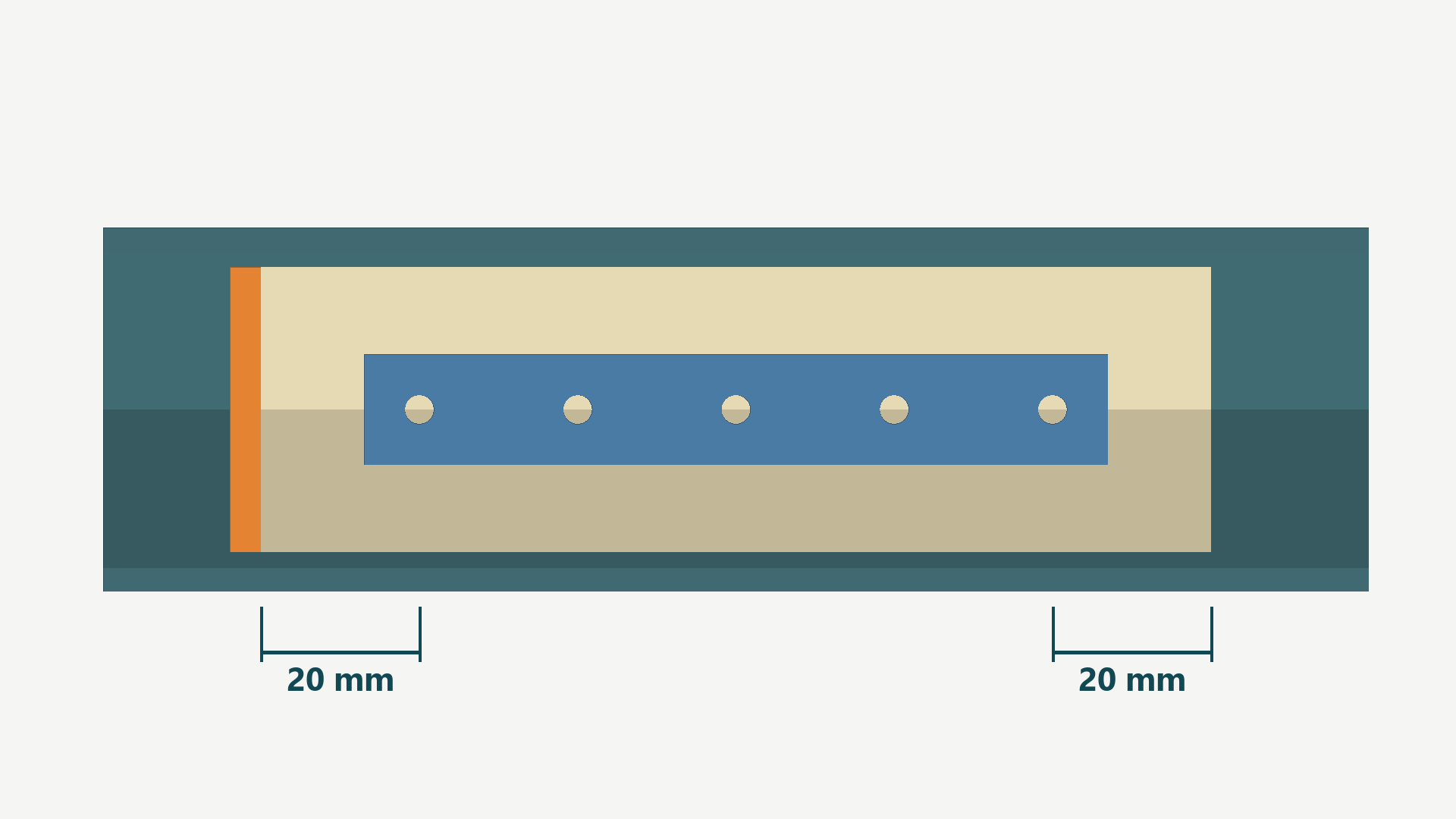
Moving the same stop back 5 mm centers the fold on the hole pattern. The first and last holes now sit 20 mm from their respective paper edges. Reopening the saved CAD document confirmed both 20 mm end margins and all four 20 mm spaces between hole centers.
For a different page size, subtract the distance between the outermost holes from the fold length, then halve what remains. That gives the end margin to aim for, as long as the hole pattern fits within the fold. The useful control is the paper position: changing it leaves the existing hole spacing intact.
Explore the Nora3D STEP editing guide for inspecting and revising an existing solid model.